

Are you looking for a practical way to identify and evaluate AI risks before they affect your enterprise? Understanding the right assessment process can help you make informed decisions about AI security, governance and deployment.
An AI risk assessment framework helps organisations identify potential AI-related risks, evaluate their business impact and determine the controls needed to manage them. It provides a structured way to assess AI systems before deployment and throughout their operational lifecycle.
In this guide, you will learn how to conduct an AI risk assessment, evaluate enterprise AI risks, prioritise threats and implement effective risk mitigation strategies. You will also explore risk scoring, assessment tables and established AI risk management approaches.
What Is an AI Risk Assessment Framework?
An AI risk assessment framework is a structured process for identifying, analysing and prioritising risks associated with artificial intelligence systems.
It examines how AI models, data, applications and automated decisions could create technical, operational, legal or business problems.
For enterprises, the process goes beyond checking whether an AI model works correctly. It also considers whether the system is secure, reliable, fair and suitable for its intended purpose.
Why Is AI Risk Assessment Important for Enterprises?
Enterprise AI systems may process confidential information, generate business recommendations or perform actions through connected applications.
Without appropriate controls, these systems can introduce risks that affect data privacy, business operations, customer trust and regulatory obligations.
A structured AI risk management process helps organisations:
- Identify potential risks before deployment.
- Assess the impact of AI failures on business operations.
- Detect weaknesses in data handling and system security.
- Establish clear ownership for risk-related decisions.
- Prioritise controls according to the severity of potential harm.
- Monitor AI systems as their capabilities and operating conditions change.
The level of assessment should reflect the system's potential impact. An AI tool that summarises internal documents may require different controls from an AI system used for high-impact decisions.
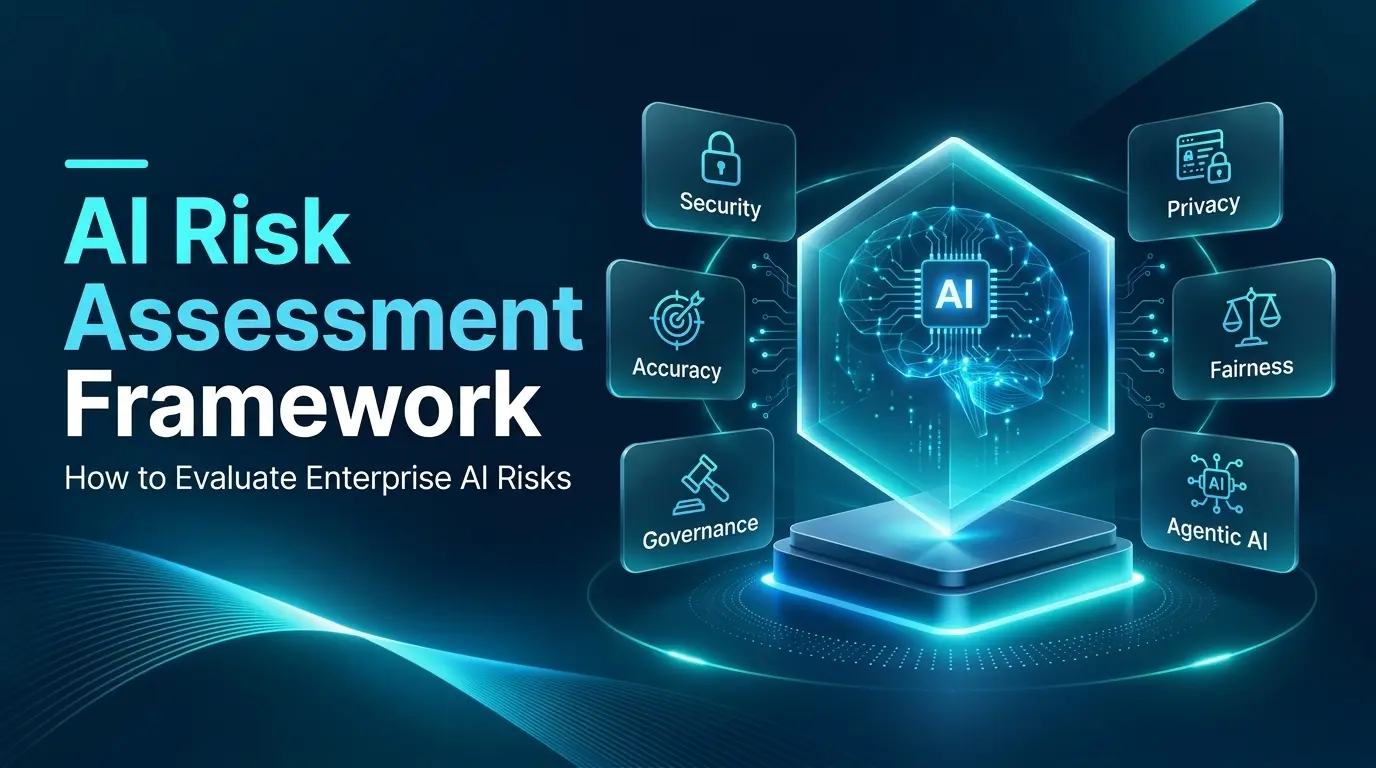
What Are the Main Enterprise AI Risks?
1. AI Security Risks
AI applications can be exposed to prompt injection, unauthorised data access, insecure integrations and misuse of connected tools. An AI security assessment should examine model behaviour, application permissions, system integrations and potential attack paths.
2. Data Privacy Risks
AI systems may process personal information, customer records and confidential business documents. Enterprises should review data access, retention, sharing and processing practices to reduce the risk of sensitive information exposure.
3. Accuracy and Reliability Risks
AI-generated outputs may contain incorrect information or recommendations that lack sufficient evidence. Organisations should establish validation requirements, performance thresholds and human review procedures for important decisions.
4. Bias and Fairness Risks
AI systems may produce unfair outcomes because of training data limitations, design choices or differences in real-world usage. Testing should identify meaningful performance differences across relevant groups and determine when human intervention is necessary.
5. Governance and Compliance Risks
Unclear responsibilities and incomplete documentation can make AI oversight difficult. An AI risk governance process should define decision-making authority, approval requirements, accountability and escalation procedures.
6. Agentic AI Risks
AI agents may interact with external tools, access business systems or execute tasks with limited human intervention. Enterprises should restrict permissions, define permitted actions and introduce approval checkpoints for sensitive or irreversible operations.
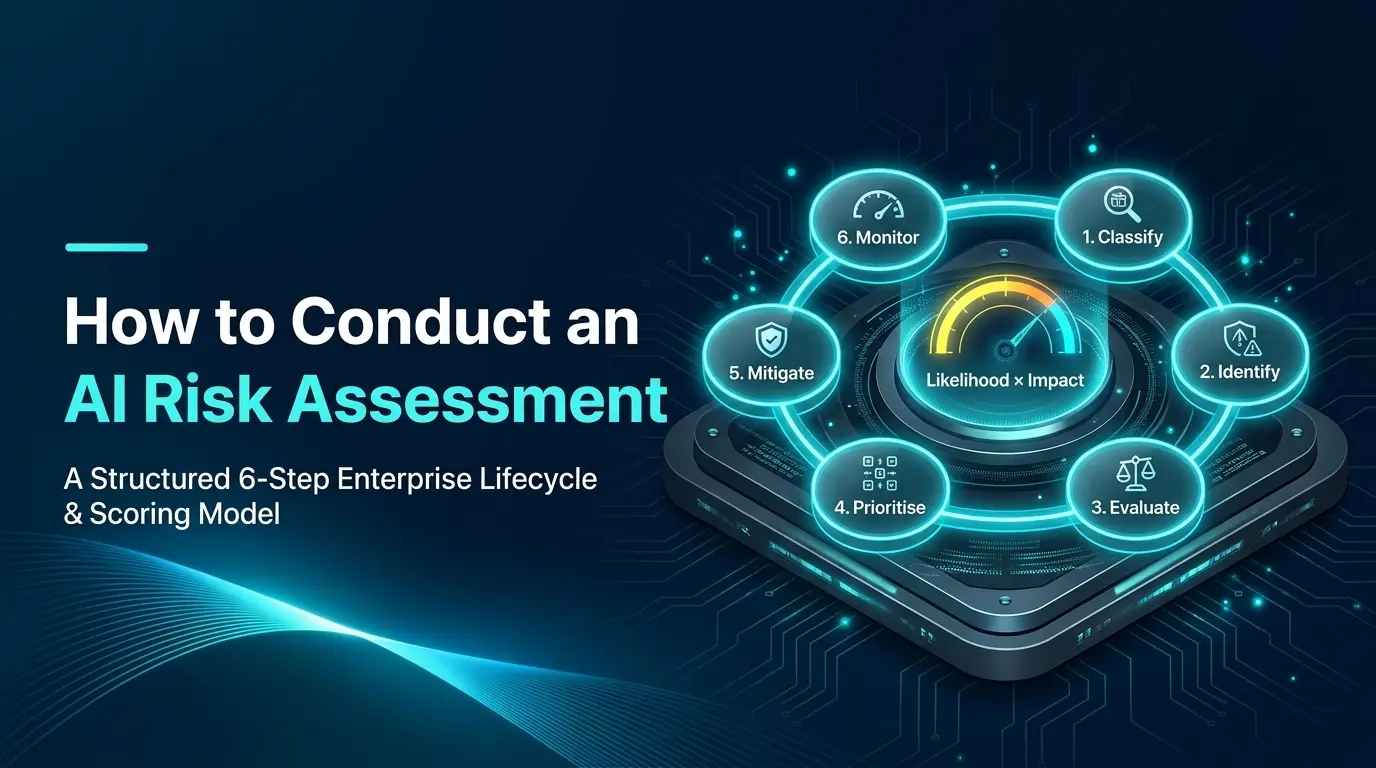
How to Conduct an AI Risk Assessment
A step-by-step guide to identifying AI risks, evaluating their potential impact, prioritising threats and implementing effective controls across your enterprise.
Step 1: Identify and Classify AI Systems
Create an inventory of AI applications, models, third-party tools and AI agents used across the organisation. Document each system's purpose, business owner, data sources, integrations and intended users.
Step 2: Identify Potential AI Risks
Examine how each system could fail, be misused or produce harmful outcomes. Consider security vulnerabilities, inaccurate outputs, privacy exposure, biased decisions and unauthorised actions.
Step 3: Evaluate Likelihood and Impact
Estimate how likely each risk is to occur and how serious its consequences could be. Consider financial losses, operational disruption, legal exposure, reputational damage and potential harm to individuals.
Step 4: Calculate and Prioritise Risk
Use consistent scoring criteria to compare identified risks.
A simple model is:
Risk score = Likelihood × Impact
For example, a likelihood score of 4 and an impact score of 5 produce a risk score of 20 out of 25.
The organisation should define its own risk thresholds. Scores should support informed judgement rather than automatically determine whether a system is safe to deploy.
Step 5: Implement Risk Mitigation Controls
Choose controls that address the most significant findings. Depending on the system, these may include access restrictions, security testing, data minimisation, output validation and human approval. Effective AI risk mitigation also requires clear ownership, documented actions and evidence that controls are operating as intended.
Step 6: Monitor and Reassess
Review AI performance, security events and control effectiveness after deployment. Repeat the assessment when material changes occur, such as model updates, new integrations, changes in intended use or significant incidents.
Enterprise AI Risk Assessment Table
Use this table as a starting point for evaluating common enterprise AI risks.
| Risk | Assessment focus | Example control |
|---|---|---|
| Security | Prompt injection and unauthorised access | Security testing and access restrictions |
| Privacy | Exposure of sensitive information | Data minimisation and permissions |
| Accuracy | Incorrect or unsupported outputs | Validation and human review |
| Fairness | Unequal outcomes | Bias testing and documented review |
| Governance | Unclear accountability | Assigned risk owners and approvals |
| Agentic AI | Unintended actions | Restricted tools and approval checkpoints |
| Third-party AI | Supplier dependencies | Vendor reviews and contractual controls |
| Operations | Performance changes and service failures | Monitoring and recovery procedures |
Controls should be selected according to the system's use case, risk exposure and potential impact.
How to Choose an AI Risk Management Framework
Enterprises can use established guidance to structure their assessment activities.
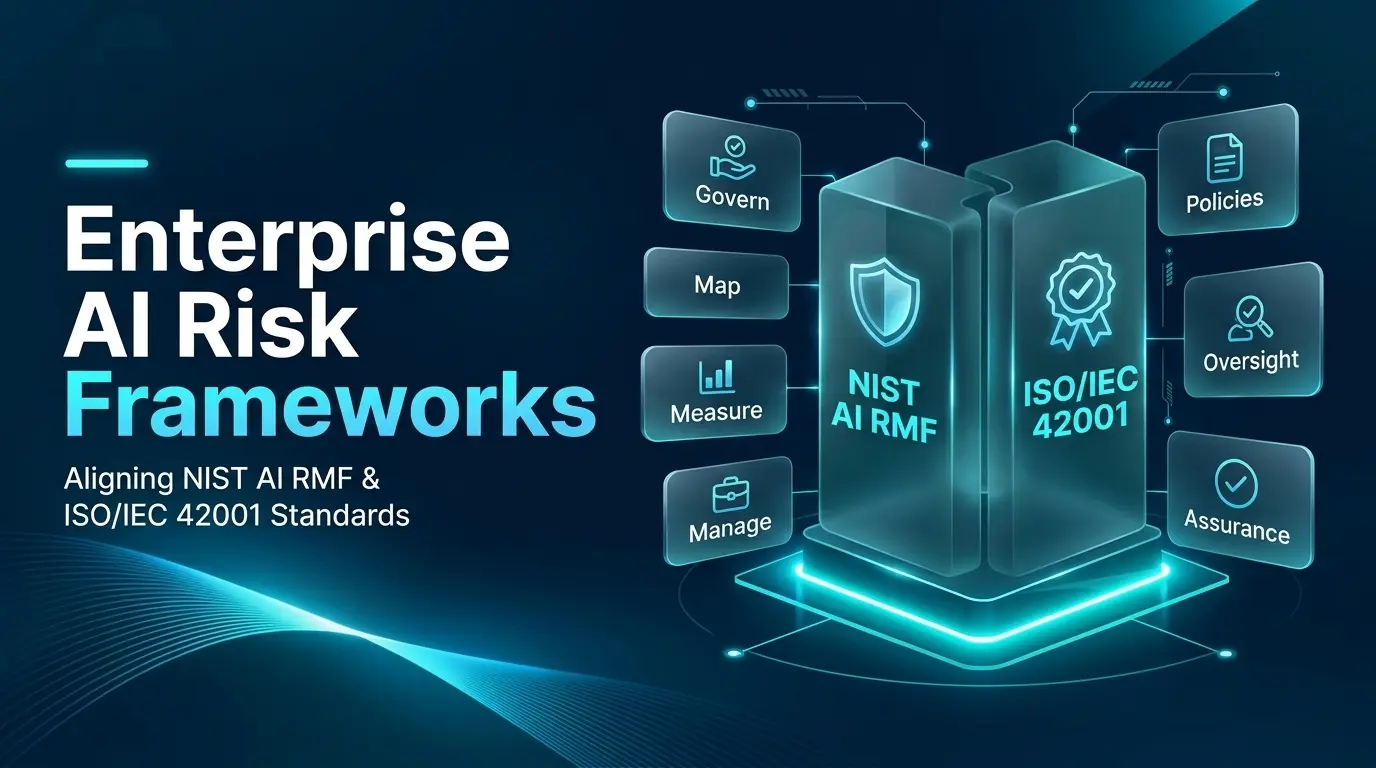
NIST AI Risk Management Framework
The NIST AI RMF organises AI risk management around four functions: Govern, Map, Measure and Manage. These functions help organisations establish accountability, understand the system's context, evaluate risks and determine appropriate responses.
ISO/IEC 42001
ISO/IEC 42001 provides requirements for establishing and continually improving an AI management system. It can support an organisation's wider AI governance programme by establishing systematic responsibilities, processes and oversight.
Which Approach Should Enterprises Use?
The right approach depends on business objectives, existing risk processes and applicable requirements. Organisations can use NIST guidance to structure risk activities and ISO/IEC 42001 to support a formal AI management system. These approaches can complement each other.
How Does AI Governance Assessment carry Risk Management?
An AI governance assessment examines whether an organisation has suitable policies, responsibilities and oversight processes for its AI systems. It can identify gaps in approval workflows, risk ownership, documentation and ongoing monitoring.
AI risk assessment and governance assessment help different motives. The first focuses on specific risks and their potential impact, while the second examines the organisational processes used to oversee AI responsibly.
Together, they help enterprises connect risk findings with business decisions and accountable action.
Best Practices for AI Risk Mitigation
An effective AI risk management framework should be practical, measurable and integrated into existing enterprise processes.
Follow these principles:
- Assess risks before accepting an AI use occasion.
- Apply stronger controls to systems with greater potential impact.
- Involve security, legal, privacy and business stakeholders.
- Document risk ratings, mitigation actions and approvals.
- Test AI systems against a practical failure and misapplication framework.
- Review third-party providers and connected applications.
- Maintain human oversight for high-impact decisions.
- Reassess risks when systems or companies needs change.
Risk management should continue after deployment. A one-time assessment cannot account for every future change in model behaviour, threats or operating conditions.
How LARETH Supports Enterprise AI Governance
Controlling enterprise AI risks needs more than examining possible issues. Companies also require understandable governance, suitable security measures, and proof that their safeguards are successful.
LARETH targets on AI Governance, AI Security, AI Assurance and Agentic AI. These areas align with the needs of organisations seeking a more structured approach to AI oversight.
Depending on the agreed engagement, support may include evaluating governance gaps, reviewing AI security risks and strengthening assurance processes. The specific scope should reflect the organisation's requirements and confirmed service capabilities.
Stay connected with us on LinkedIn for the latest insights, updates, and expert perspectives on AI Governance, AI Security, and emerging technology trends.
Final Thoughts
An effective AI risk assessment framework helps enterprises identify potential risks, evaluate their impact and establish the right controls before AI-related issues affect business operations. By combining structured risk assessments, clear governance policies, continuous monitoring and practical mitigation measures, organisations can strengthen accountability, improve decision-making and support the responsible adoption of AI across the business.
Frequently Asked Questions
Q1. What is an AI risk assessment framework?
An AI risk assessment framework provides a structured process for identifying, evaluating and managing risks associated with AI systems. It assists enterprises in prioritising protection and starting responsibility.
Q2. How do you conduct an AI risk assessment?
Identify AI systems, document potential risks, evaluate likelihood and impact, prioritise findings, implement controls and monitor their effectiveness after deployment.
Q3. What are the biggest risks of enterprise AI?
Common risks include security vulnerabilities, data exposure, inaccurate outputs, bias, governance gaps, third-party dependencies and unintended actions by AI agents.
Q4. How is AI risk calculated?
Organisations can multiply likelihood and impact scores to produce a risk rating. They should define scoring criteria and thresholds that reflect their business context and risk tolerance.
Q5. What is AI risk mitigation?
AI risk mitigation involves implementing controls to reduce the likelihood or impact of AI-related problems. Examples include security testing, access restrictions, validation and human oversight.
Q6. What is the difference between AI risk assessment and AI governance?
AI risk assessment evaluates specific risks. AI governance establishes the policies, responsibilities and decision-making processes used to oversee AI systems.
Q7. What is the NIST AI Risk Management Framework?
The NIST AI RMF is advice for handling AI risks. Its four central purpose are Govern, Map, Measure, and run.
Q8. How does ISO/IEC 42001 help enterprises?
ISO/IEC 42001 identifies the need for an AI management order. It helps organisations establish systematic processes for AI oversight and continual improvement.
Q9. How often should an AI risk assessment be executed?
Assessments should be reviewed periodically and whenever significant changes affect a system's purpose, model, data, integrations or risk profile.
Q10. Can an AI risk assessment guarantee compliance?
No. An assessment supports risk management but cannot guarantee compliance or eliminate every risk. Organisations must verify applicable requirements and maintain effective controls.


Leave a comment
Your email will not be published. All comments are reviewed before appearing.