

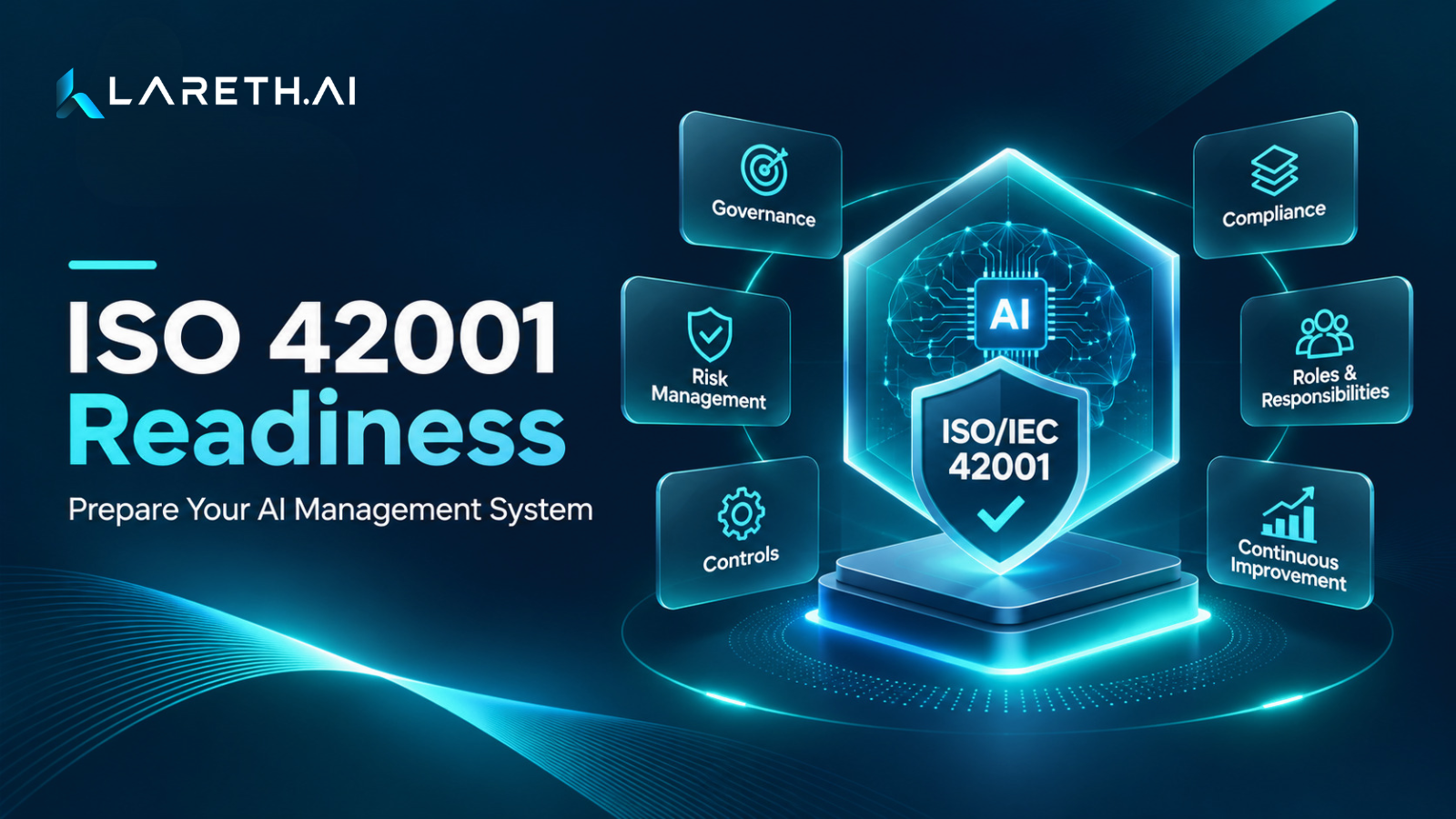
Are you preparing your organization for ISO/IEC 42001 and wondering whether your AI governance processes are ready? A structured readiness checklist can help you identify gaps, organize documentation, and prepare your teams for a more systematic approach to AI management.
An ISO 42001 readiness assessment evaluates how well your organization's existing AI policies, risk management processes, controls, and documentation align with the requirements of ISO/IEC 42001. It helps identify areas that need improvement before pursuing certification.
In this guide, you will learn the key readiness requirements, practical implementation steps, common gaps, and a checklist to help prepare your AI management system (AIMS).
What Is ISO/IEC 42001?
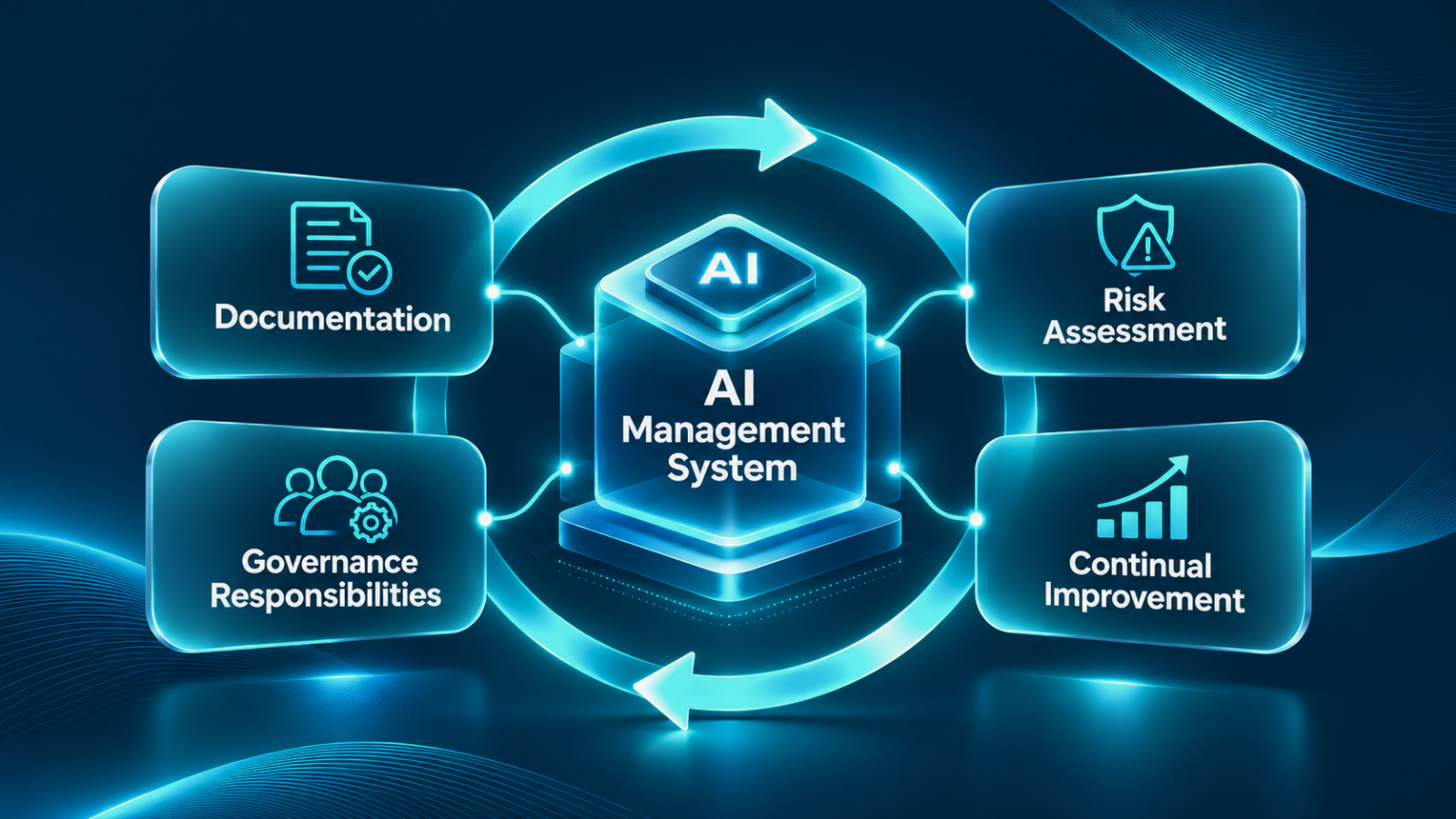
ISO/IEC 42001:2023 is an international standard that specifies requirements for establishing, implementing, maintaining, and continually improving an AI management system.
It provides a structured approach to managing AI-related risks, responsibilities, processes, and controls throughout the AI lifecycle.
For enterprises, an AI management system helps connect AI governance with business objectives, operational procedures, security practices, and ongoing improvement. It provides a repeatable way to manage AI rather than relying on separate policies or informal decisions.
Why Is ISO 42001 Readiness Important?
Preparing for ISO 42001 helps organizations understand whether their current AI management practices are sufficiently structured and documented.
A readiness review can reveal missing policies, unclear responsibilities, incomplete risk assessments, and gaps in monitoring before these issues become obstacles during a formal assessment.
Key benefits include:
- Clearer AI governance: Define responsibilities, decision-making processes, and oversight.
- Structured risk management: Identify and evaluate risks associated with AI systems.
- Better documentation: Maintain evidence of policies, decisions, controls, and reviews.
- Consistent processes: Apply agreed procedures across relevant AI activities.
- Continual improvement: Review performance, address gaps, and update controls as needed.
Readiness does not automatically mean an organization conforms to every requirement or will achieve certification. The outcome depends on the scope, implementation, and evidence of the management system.
ISO 42001 Readiness Checklist: 8 Key Areas
Use the following checklist to review the main areas of your AI management system. The exact activities and evidence required will depend on your organization's scope and circumstances.
1. Define the Scope of Your AI Management System
Start by defining which business activities, departments, AI systems, and processes fall within the proposed scope of your AI management system (AIMS).
Consider how AI is developed, purchased, integrated, deployed, and monitored across the organization. Include relevant internal teams, external providers, and supporting processes.
Document the scope clearly so that everyone understands which activities are covered and where responsibilities begin and end.
Readiness checks:
- Define the intended AIMS scope.
- Identify relevant business functions and AI activities.
- Consider internal and external factors that may affect AI management.
- Document relevant interested parties and their needs.
2. Establish AI Governance Policies and Leadership Commitment
An effective AI management system needs leadership support and clear governance direction. Senior management should understand the organization's AI objectives, responsibilities, and approach to managing AI-related risks.
Create an AI policy that reflects business priorities and establishes the principles guiding AI development and use. Ensure the policy is communicated to relevant employees and reviewed when circumstances change.
Readiness checks:
- Establish an AI policy and relevant objectives.
- Define leadership responsibilities and accountability.
- Assign ownership for key AI management activities.
- Communicate governance expectations to relevant teams.
3. Conduct an AI Risk Assessment
An AI risk assessment helps identify potential issues associated with the organization's AI systems and their intended use.
Consider risks relating to data quality, privacy, security, unreliable outputs, bias, human oversight, third-party dependencies, and operational impact where relevant. Assess each risk according to its potential consequences and the organization's defined criteria.
Document the assessment results and determine how risks will be treated, monitored, or accepted through the appropriate decision-making process.
Readiness checks:
- Identify relevant AI risks and potential impacts.
- Establish risk assessment and evaluation criteria.
- Document risk treatment decisions.
- Assign responsibility for implementing risk controls.
- Review risks when systems or intended uses change.
4. Maintain an AI System Inventory
Organizations need sufficient visibility into the AI systems within their management scope. Without an inventory, important systems, dependencies, and ownership gaps may go unnoticed.
Record each system's purpose, owner, data inputs, supplier, users, deployment status, and relevant risk information. The level of detail should reflect the complexity and risks of each system.
Readiness checks:
- Maintain an inventory of relevant AI systems.
- Identify system owners and responsible teams.
- Document intended uses and important dependencies.
- Record relevant lifecycle stages and changes.
- Review the inventory periodically.
5. Implement AI Security and Operational Controls
Governance policies should translate into practical controls. These may include access management, secure data handling, testing procedures, logging, change management, incident response, and monitoring.
The controls should reflect identified risks and applicable requirements. For example, an AI system processing confidential information may need stronger access restrictions and data protection measures than a low-risk internal application.
Readiness checks:
- Define appropriate security and operational controls.
- Establish processes for AI system testing and changes.
- Document incident reporting and response procedures.
- Review third-party AI providers where relevant.
- Maintain evidence that applicable controls are operating.
6. Build Employee Competence and Awareness
Employees involved in AI development, procurement, deployment, and use should understand their responsibilities. Governance procedures are difficult to implement consistently when teams do not know which requirements apply to their work.
Identify the skills needed for relevant roles and provide appropriate training or guidance. Maintain records where necessary to demonstrate competence and awareness.
Readiness checks:
- Identify AI-related responsibilities and skill requirements.
- Provide role-appropriate training.
- Communicate relevant AI policies and procedures.
- Maintain appropriate training and competence records.
7. Prepare Documentation and Evidence
An ISO 42001 readiness assessment should examine both documented procedures and evidence of implementation. A policy alone may not demonstrate that the process is operating as intended.
Organize relevant records, including risk assessments, approvals, system inventories, training records, monitoring results, incident reports, and management review outputs.
Keep documentation controlled, accessible to authorized personnel, and updated when processes change.
Readiness checks:
- Identify required documented information.
- Maintain records of relevant decisions and assessments.
- Establish document version control.
- Make evidence available to authorized reviewers.
- Address missing or outdated records.
8. Establish Monitoring and Continual Improvement
An AI management system should evolve as technology, risks, and business requirements change. Establish processes for measuring performance, reviewing controls, investigating incidents, and addressing identified problems.
Internal audits and management reviews can help determine whether the system is implemented effectively and where improvements are needed. Corrective actions should have assigned owners and clear follow-up.
Readiness checks:
- Define appropriate monitoring and measurement methods.
- Establish internal audit and management review processes.
- Track nonconformities and corrective actions.
- Review the effectiveness of implemented controls.
- Maintain a documented improvement process.
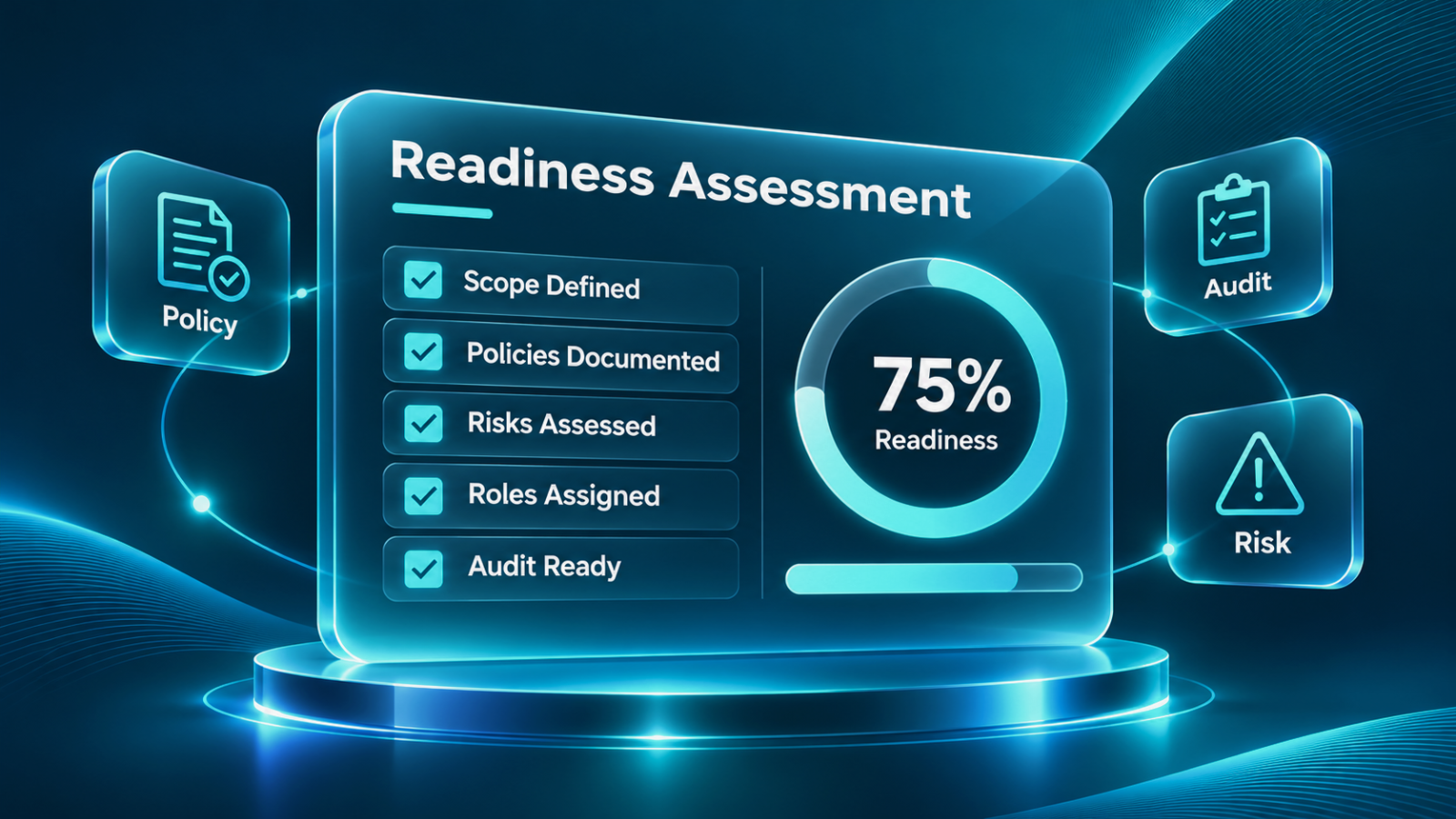
ISO 42001 Readiness Checklist at a Glance
Use this summary to track the main preparation activities.
| Readiness Area | Key Evidence to Review |
|---|---|
| AIMS scope | Scope statement and boundaries |
| Leadership and governance | AI policy, objectives, assigned roles |
| AI risk management | Risk assessments and treatment records |
| AI system inventory | System register and ownership details |
| Operational controls | Security, testing, and change procedures |
| Employee competence | Training and awareness records |
| Documentation | Controlled documents and implementation evidence |
| Monitoring and improvement | Audit results, reviews, corrective actions |
Mark each area as complete only when relevant evidence has been reviewed. Where gaps remain, record the issue, assign an owner, and establish a realistic target date.
Common Gaps to Address Before an ISO 42001 Assessment
A look at the most common gaps organizations face before an ISO/IEC 42001 assessment, covering key areas that need attention to ensure AI governance, risk management, documentation, and compliance are properly addressed.
1. Incomplete AI Documentation
Missing system records, outdated policies, and undocumented decisions can make it difficult to demonstrate how AI is managed. Establish a central process for maintaining relevant documents and evidence.
2. Unclear Responsibilities
When ownership is not defined, risk assessments, approvals, and corrective actions may be delayed. Assign responsibilities and establish clear escalation routes.
3. Risk Assessments Without Follow-Up
Identifying risks is only one part of risk management. Organizations should document treatment decisions, implement appropriate controls, and review whether those controls remain effective.
4. Limited Monitoring and Review
A management system needs ongoing oversight. Establish suitable measures, internal reviews, and corrective action processes to address gaps as they emerge.
How LARETH.AI Can Support ISO 42001 Readiness
LARETH.AI supports organizations in preparing for ISO/IEC 42001 by identifying gaps in AI governance, assessing potential risks, reviewing existing security controls, and guiding practical improvements.
Our approach helps organizations strengthen their AI management systems through structured assessments, clear documentation, and actionable implementation roadmaps aligned with relevant standard requirements.
Stay connected with LARETH.AI on LinkedIn for the latest insights, updates, and expert perspectives on AI governance, security, and responsible AI adoption. Follow us on LinkedIn.
Final Thoughts
An effective ISO 42001 readiness checklist helps organizations identify gaps, strengthen AI governance, and prepare their AI management systems for a structured assessment. Start with clear responsibilities, documented risk management, practical controls, and continual improvement.
Frequently Asked Questions
Q1. What is an ISO 42001 readiness checklist?
An ISO 42001 readiness checklist is a practical tool for reviewing an organization's AI management policies, risk processes, controls, documentation, and monitoring arrangements before a formal assessment.
Q2. What is an AI management system?
An AI management system is a order set of policies, responsibilities, procedures, and controls used to run AI-related risks and carry the responsible evolution and use of AI.
Q3. Is ISO/IEC 42001 certification mandatory?
ISO/IEC 42001 certification is not automatically obligatory for every company. Business objectives, contractual commitments, customer expectations, and applicable requirements may influence whether certification is appropriate or necessary.
Q4. What documents are needed for ISO 42001 readiness?
Relevant documentation may include the AIMS scope, AI policy, objectives, risk assessments, system inventory, control records, training evidence, monitoring results, internal audit records, and management reviews.
Q5. How do you conduct an ISO 42001 readiness assessment?
Review the standard's applicable requirements against existing processes and evidence. Identify gaps, assess their significance, assign corrective actions, and track progress before the formal assessment.
Q6. How long does ISO 42001 implementation take?
The timeline depends on the organization's size, AI complexity, existing governance maturity, available resources, and the scope of implementation. A readiness assessment helps to start a more practical plan.
Q7. What is the difference between ISO 42001 readiness and certification?
Readiness identifies gaps and helps prepare the management system. Certification involves an independent assessment by an appropriate certification body to determine whether the applicable requirements have been met.
Q8. Does ISO 42001 cover AI security?
ISO/IEC 42001 addresses AI management, including risk management and controls relevant to an organization's AI business. Security measures should be selected according to identified risks and applicable requirements.
Q9. Can businesses use ISO 27001 with ISO 42001?
Yes. Organizations may integrate relevant information security management practices with their AI management system where appropriate. The standards have different scopes, so alignment with one does not automatically establish conformity with the other.
Q10. How often should AI management processes be reviewed?
Reviews should follow the organization's defined processes and reflect system risks, performance, significant changes, incidents, and applicable requirements. Monitoring should continue throughout the AI lifecycle.



Leave a comment
Your email will not be published. All comments are reviewed before appearing.